Mapping of Evangelical Christian Organizations and Churches that carry out actions to support refugees and migrants in Brazil.


The number of forcibly displaced people reached 120 million in 2024, including internally displaced persons and refugees, reflecting the impact of conflicts, climate change, and economic crises, according to the UN Refugee Agency (UNHCR).
According to the latest edition of the “Refuge in Numbers” report, only in 2023, 58,628 refugee status applications were submitted in Brazil, coming from 150 countries.
We present PHASE 2 of the Mapping, which consisted of actions aimed at updating data for the 2024 context, considering that migration flows are constantly changing and the host institutions also adjust their operations, closing or adapting their activities. The goal is to make this tool increasingly realistic, practical, and useful through continuous updates and improvements, enhancing the ability to identify, connect, interact, and integrate institutions, aiming for more effective results.
Phase 2 of the Mapping was carried out through a partnership between Associação CASA, the Movement "Como Nascido Entre Nós", the International Bible Society, and Tearfund, with support from the UN Refugee Agency (UNHCR).
Below we present a summary of the mapped information.
In the previous mapping, 105 organizations and churches participated in activities related to migration and refuge.
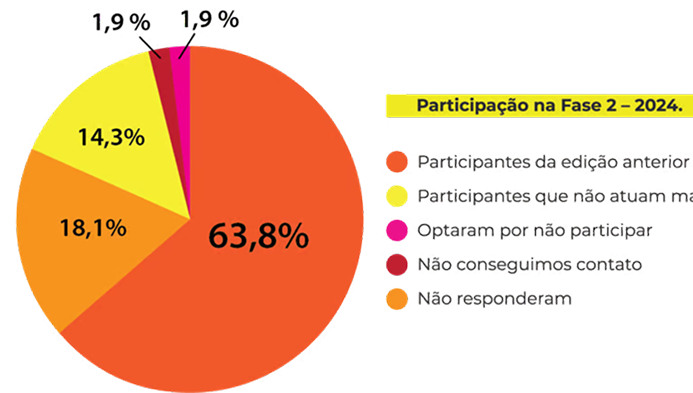
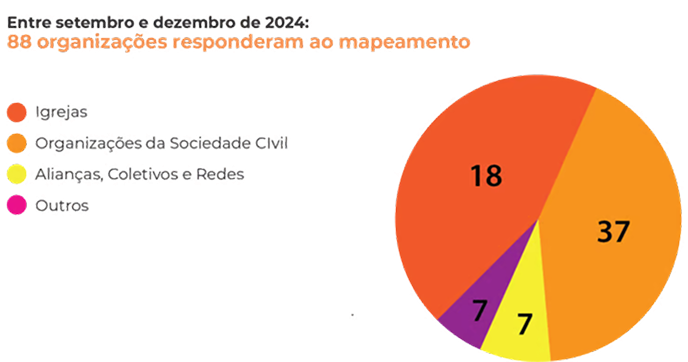
Compared to the previous year, there was a change in the chart. Most of those who stopped working on this issue were churches (11), followed by 3 organizations and 1 collective.

Number of volunteers working with refugee and migrant populations

Six institutions do not have volunteers working directly with refugee or migrant populations. However, the majority (29 institutions, or 33%) have between 1 and 5 volunteers, and 21 organizations (24%) have between 6 and 10 volunteers. The remaining 30 institutions have more than 10 volunteers working with this population, with 3 of them having more than 50 volunteers.
These figures highlight the importance of volunteer work in assisting migrant and refugee populations.
Number of employees working with refugee and migrant populations

More than half of the institutions (60%) do not have hired employees working directly with refugee or migrant populations. A significant share (24 institutions, 27%) has between one and ten employees, while 9 institutions have more than ten employees dedicated to this work.
116 thousand assistances
directly to refugee or migrant populations in 2023
The significant number of services provided to refugee and migrant populations covers a wide range of actions, from organizations and churches that assisted a single refugee family during the year to large projects that provided thousands of services.
Individuals from at least 40 nationalities have been assisted by the organizations and churches participating in the mapping.
The following nationalities stand out:

Venezuela
68
Organizations/Churches

Afghanistan
42
Organizations/Churches

Haiti
27
Organizations/Churches

Cuba
22
Organizations/Churches

Syria
18
Organizations/Churches

Angola
68
Organizations/Churches
Among the services and assistance provided by Evangelical Christian organizations and churches, the most mentioned were spiritual support, documentation assistance, and Portuguese classes, highlighted by more than half of the mapped organizations.
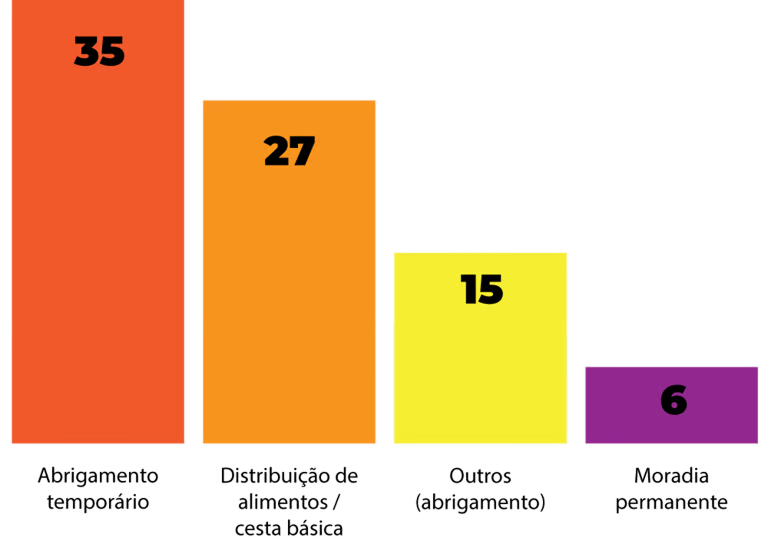

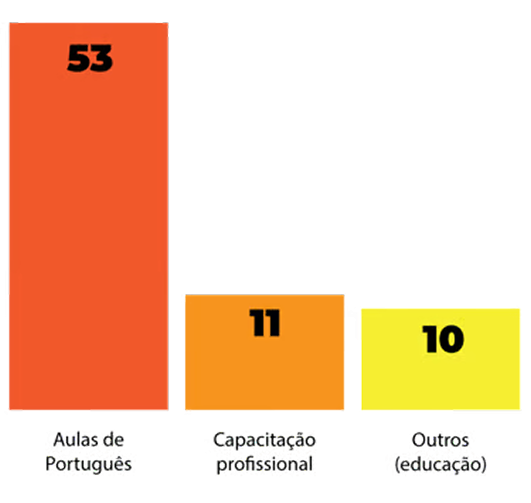


The mapped organizations and churches are present (either through headquarters or active work) in at least 16 federative units and 60 municipalities.